Garage Door Accessories Parker: A Homeowner’s Buying Guide
A garage door is easy to ignore until it stops doing its job well. Most homeowners think about the door itself, maybe the opener, and little else. Then winter arrives, the remote fails at the end of a long day, the bottom seal lets in grit and cold air, or the safety sensors start acting Garage Door Accessories Parker up right when the car is halfway out. That is usually when accessories stop feeling optional.
If you are shopping for Garage Door Accessories Parker homeowners actually use and benefit from, it helps to think beyond add-ons marketed for novelty. The best accessories improve safety, reliability, weather protection, convenience, and the lifespan of the entire system. Some are inexpensive and easy to install. Others are better handled by a technician because they affect balance, spring tension, or safety features.
Buying well comes down to one simple question: what problem are you trying to solve? A keypad solves access. A battery backup solves power outages. A better seal solves dust, water, and temperature loss. A smart controller solves visibility and control when you are away from home. The wrong accessory wastes money. The right one makes the whole garage feel more secure and usable.
The accessories that actually matter
There is a big difference between accessories that look good in a product listing and accessories that improve daily life. In practice, most homeowners get the most value from a fairly short group of upgrades.
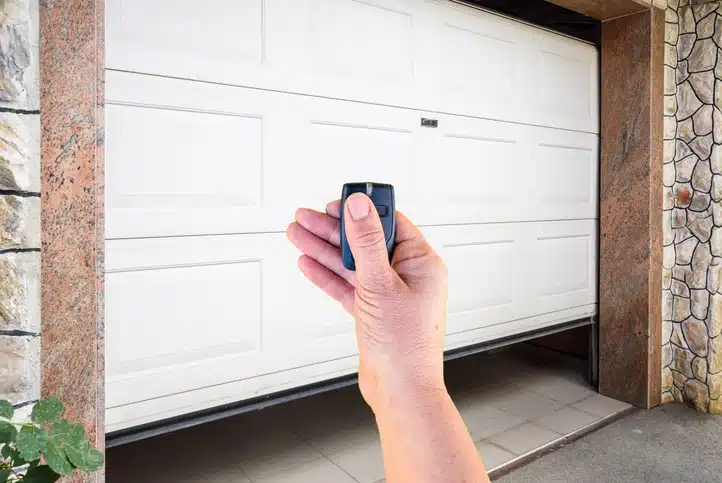
Remote controls, wireless keypads, and smart controllers top the list because they change how the door is used every day. Weather seals and threshold seals matter because they protect the garage from moisture, leaves, dust, insects, and cold drafts. Safety accessories, especially photo eyes and motion-detecting lights, matter because garage doors are heavy machines, not just moving panels. A battery backup becomes far more appealing after the first power outage when the car is trapped inside.
Decorative hardware has its place too, but it belongs in a different category. It changes appearance, not performance. If the budget is limited, spend on safety and durability first. Style can wait.
One pattern I have seen over and over is homeowners spending money on a sleek new remote system while ignoring badly worn rollers, cracked seals, or a misaligned sensor. That is the equivalent of putting a new lock on a door that no longer closes properly. Accessories work best when the core system is in decent shape.
Start with the opener, because compatibility rules everything
Before buying anything, identify your opener brand, model, and approximate age. This single step prevents most accessory headaches. Garage door accessories are not universally interchangeable, especially when electronics are involved. A keypad that pairs easily with one system may not work at all with another. The same goes for Wi-Fi modules, wall consoles, and remotes.
If your opener is more than ten to fifteen years old, compatibility becomes less predictable. Older units may still run perfectly well, but accessory support can be limited. That does not always mean replacement is necessary. It does mean you should verify frequency, programming method, and safety feature compatibility before ordering.
For Parker homeowners, this matters even more if you are trying to coordinate upgrades during a repair visit. It is common for someone to call about a noisy door and then decide to add a keypad, fresh remotes, and a new bottom seal at the same time. That can be smart and efficient, but only if the parts are selected around the actual system in your garage.
Weather protection is not glamorous, but it pays off
If your garage feels dusty, smells musty after snow melts, or gets a thin line of water after a storm, weatherproofing deserves attention. Seals wear slowly enough that many people do not notice the decline until the gap is obvious.
The bottom seal is usually the first place to look. Over time it can flatten, crack, or pull away from the retainer. Once that happens, the door may close but still leave irregular gaps where air and debris can enter. Side and top seals also matter, especially if the door frame has shifted slightly over the years. A threshold seal can help when the slab is uneven or water tends to run toward the garage.
In a place like Parker, where wind, Garage Door Accessories Parker sun exposure, and seasonal temperature swings can be rough on rubber and vinyl, material quality matters. Cheap seals harden faster and lose flexibility. Better seals cost more up front, but they usually fit better and last longer. A brittle bottom seal can turn a minor nuisance into a real issue if water repeatedly gets inside and affects stored items, drywall, or the base of framing.
A common mistake is assuming a new seal alone will fix every gap. Sometimes the real issue is door alignment, worn hinges, or track problems that prevent the door from sitting evenly on the floor. If the seal is new and the gap persists, the accessory is not the problem. The system needs adjustment.
Smart controls are useful, but only when they fit your habits
Smart garage accessories are often worth it, though not for every homeowner. The strongest case for them is practical, not flashy. If you regularly wonder whether you left the garage open, want activity alerts, or need to let in a family member or delivery while you are away, a smart controller can be genuinely helpful.
What separates a good smart setup from an annoying one is reliability. App control sounds great until the connection drops, the pairing process fails, or the notification settings become a nuisance. When choosing a smart accessory, pay attention to how it integrates with your opener, whether it requires a separate bridge or hub, and how well it works if your home Wi-Fi is spotty in the garage.
There is also a privacy side to consider. A garage is a major access point to the house, so account security matters. Use strong passwords, enable two-factor authentication if available, and avoid sharing app access broadly. Convenience should not come at the cost of weak digital security.
For families with teenagers, dog walkers, house sitters, or frequent visitors, smart access can be far cleaner than passing around spare remotes. You can grant temporary access, monitor usage, and remove permissions when they are no longer needed. That is one of the few home tech upgrades that often proves its worth within the first month.
Safety accessories deserve more respect than they usually get
Garage doors are heavy, spring-loaded systems with enough force to injure someone or damage a vehicle. Safety accessories are not just add-ons. In some cases, they are essential components that need maintenance or replacement.
Photo eye sensors are a good example. They sit low to the ground and can be bumped out of alignment by trash bins, bikes, tools, or kids. Even a little dust on the lens can cause erratic behavior. When a door closes partway and reverses for no clear reason, sensors are a frequent culprit. Replacing or realigning them is often inexpensive, but it should be done carefully and tested thoroughly.
Motion-detecting opener lights are another underrated feature. A dark garage creates hazards, especially when people are carrying bags, stepping around stored items, or arriving late. Better lighting improves safety and makes the garage more usable as a workspace, not just a parking spot.
Battery backup belongs in this category too. Many people think of it as a convenience feature until the power goes out during bad weather, late at night, or when someone needs to leave quickly. If your garage door is the main daily entry point to the house, battery backup is not a luxury. It is a practical layer of resilience.
The accessories most homeowners should consider first
If you are trying to prioritize, start with the accessories that solve the most common real-life issues:
- A wireless keypad for simple, key-free access
- A battery backup for outages and emergencies
- New weather seals if air, water, or debris gets inside
- Additional remotes or a smart controller for household convenience
- Replacement safety sensors or upgraded lighting if visibility or door reversal is unreliable
That list covers the upgrades that tend to deliver obvious value quickly. It also avoids the trap of buying cosmetic extras while everyday problems remain unresolved.
Noise reduction upgrades can change how the whole house feels
Noise is one of the most underestimated garage door complaints. People get used to rattling rollers and vibration until a bedroom is added above the garage, a baby starts napping at home, or someone begins leaving early for work. Then every opening cycle feels louder than it should.
A surprisingly large share of garage noise comes from worn rollers rather than the opener itself. Steel rollers can be durable, but they are often noisier as they age. Nylon rollers usually run more quietly, especially when paired with proper lubrication and tracks that are in good shape. Vibration isolation kits for openers can also help, particularly in attached garages where the noise travels into living areas.
This is one area where homeowners often misdiagnose the issue. They assume the opener is dying and replace it, only to find the system is still noisy because the real problem was hardware wear. In other cases, the noise is a warning sign of something more serious, such as a bent track, loose hinge, or failing spring. Accessories can help, but they should not be asked to cover up mechanical problems.
Decorative hardware has value, just keep expectations realistic
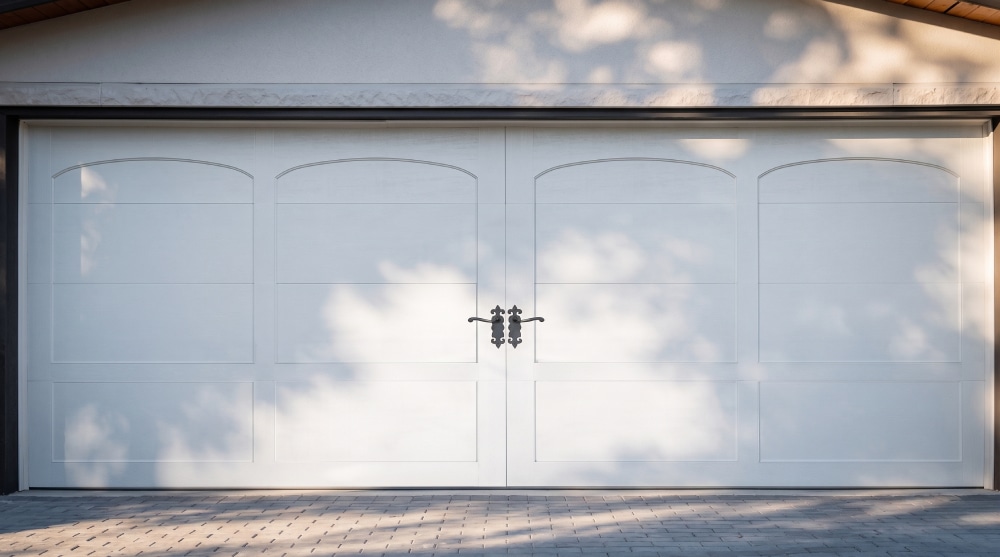
Decorative handles, hinge-style accents, and upgraded exterior trim can improve curb appeal, especially on carriage-house style doors. If the front-facing garage dominates the home’s exterior, modest visual upgrades can make a noticeable difference.
The key is buying hardware made for garage doors, not generic decorative metal sold for other outdoor uses. Garage doors flex as they move. Hardware needs to mount securely without interfering with panel movement, insulation, or balance. Finish quality matters too. Sun exposure can be hard on lower-cost coatings, and peeling black paint looks worse than no decorative hardware at all.
This is one of those cases where budget should match goals. If you are selling soon and want a quick visual lift, simple decorative accents may be enough. If you plan to stay in the house for years, it is worth choosing hardware with better corrosion resistance and a style that fits the architecture rather than chasing whatever is popular this season.
When DIY makes sense, and when it does not
Some garage door accessories are very manageable for a careful homeowner. Others should not be touched without training and proper tools. The dividing line is safety and system tension.
A keypad, remote, smart controller, bottom weather seal, or threshold seal can often be installed by a handy homeowner, assuming the product is compatible and the instructions are followed closely. Sensor cleaning and minor alignment checks are also reasonable for many people.
Once an accessory requires interaction with springs, cables, drums, or major track adjustments, it is time to stop. The risk is not theoretical. Torsion systems store significant energy, and mistakes can be expensive or dangerous. Even what looks like a small adjustment can create a larger balance issue if done incorrectly.
One practical compromise is to bundle accessory installation with routine service. If a technician is already coming out for a tune-up, roller replacement, or opener repair, adding a keypad or battery backup at the same time is often efficient. It also gives you a chance to confirm compatibility before money is spent on the wrong part.
How to shop for Garage Door Accessories Parker homeowners can trust
The local angle matters. Buying Garage Door Accessories Parker residents need is not just about finding a low online price. It is about choosing products that hold up in your conditions and getting advice that reflects local service realities.
A local supplier or garage door company can often spot compatibility issues quickly, especially when homeowners provide photos of the opener label, wall button, tracks, and seals. They also tend to know which accessories routinely hold up well and which ones lead to callbacks. That kind of practical pattern recognition is hard to get from a product page.
Online buying has advantages too, particularly for straightforward accessories like extra remotes, keypads, or decorative hardware. Just be disciplined about model verification. The most frustrating purchases are often the ones that are almost compatible. They look right, they claim broad support, and then they fail during programming or operate inconsistently.
If you are comparing options, focus on warranty terms, weather resistance, installation support, and replacement part availability. Fancy feature lists matter less than dependable daily use.
Questions worth asking before you buy
A few simple questions can prevent expensive missteps:
- Is this accessory compatible with my opener brand, model, and year
- Will it improve safety, weather resistance, or daily convenience in a measurable way
- Is the problem really an accessory issue, or does the door need repair first
- Can I install and test it safely myself
- If it fails, are replacement parts and support easy to get locally
Those questions sound basic, but they cut through most impulse purchases.
The hidden cost of cheap accessories
There is nothing wrong with value shopping. There is a difference, though, between good value and false economy. Cheap remotes can have limited range or spotty programming. Low-grade seals may shrink or harden quickly. Off-brand smart modules can become useless if support disappears or app compatibility breaks after an update.
The hidden cost is not only replacement. It is also time, frustration, and sometimes a false sense of security. If a keypad intermittently fails, that is not a minor annoyance when someone is locked out in bad weather. If a sensor is unreliable, that is not a corner to cut.
Good accessories do not have to be premium-priced, but they should come from a manufacturer with a real track record and clear support information. In this category, “good enough” should still mean safe, reliable, and appropriate for the system you own.
A buying approach that works in the real world
The most effective way to upgrade a garage door is usually incremental. Start with the parts that affect function and safety every day. Fix worn seals. Replace unreliable remotes. Add a keypad if household access is clumsy. Consider battery backup if outages are a real concern. Move to smart controls if they will genuinely simplify how you use the space.
Then step back and assess the full system. If the door is loud, jerky, visibly uneven, or slow to respond, accessories may only be part of the answer. A service call and a professional tune-up can reveal whether the real issue is hardware wear, opener age, spring fatigue, or simple neglect.
Homeowners often look for one product that transforms everything. In practice, the best results usually come from a few well-chosen accessories paired with a door system that is adjusted correctly and maintained regularly.
A garage door is one of the largest moving parts in any home. It protects vehicles, tools, storage, and often a direct entry into the house. Treating its accessories as practical tools rather than impulse add-ons leads to better decisions and fewer headaches. When chosen with compatibility, climate, and actual daily use in mind, the right upgrades can make the garage quieter, safer, more weather-tight, and much easier to live with.
Select Garage Doors
11479 Pine Dr
Parker, CO 80134, United States
Phone: (303) 228-0018
FAQ About Garage Door Accessories Parker
Where can I find garage door accessories?
Garage door accessories are available from garage door service companies, authorized dealers, home improvement stores, and specialist suppliers. Select Garage Doors supplies and installs accessories for homeowners in Parker, including compatible remotes, wireless keypads, weather seals, and smart controls. Check your opener model and door specifications before choosing a replacement or upgrade.
How to make a garage door more attractive?
Cleaning the door, refreshing a manufacturer-approved finish, and choosing coordinated decorative handles or hinge accents can improve its appearance. Compatible window inserts may also change the look of an existing window section. Match accessories to the door material and style, and make sure added hardware does not interfere with movement, seals, or safety equipment.
Where can I buy garage door inserts?
Decorative window inserts can be sourced through the door manufacturer, an authorized garage door dealer, or a supplier that carries parts for your specific door series. Match the model, window frame dimensions, and attachment system; inserts are not universally interchangeable. Ask a professional to confirm compatibility before ordering, especially if the work involves glass or changes to a door section.
Corrections
Spot something wrong? Send it to the desk and it gets fixed in the open.